One Oshi-Colour Accent: Coloured Socks or a Neutral Pair?
Choose the colour's job before choosing socks
A personally meaningful colour can fit into clothes you already own. Start by deciding where you want to see it. If blue is your chosen colour and your outfit has no other blue detail, pale blue socks can supply that accent. If a bag, ribbon or other accessory already carries the colour, White or Black socks may leave that detail in charge. If your existing socks do the same job, keep them.
This guide is for adults exploring that small styling decision with everyday neutral clothes. The examples use four KawaSocks designs to compare colour, visible surface detail and cuffs. They are alternatives for different results, rather than a shopping list to complete.
Before looking at products, finish this sentence: “I want the colour to appear at my ankles,” or “I already have the colour where I want it.” That answer is more useful than assuming every part of the outfit needs to repeat it. A sock purchase should solve the remaining gap.
Keep the meaning personal and the outfit familiar
You might associate a colour with a favourite performer, fictional character or another interest. You decide that connection. This article does not assign official colours to characters or suggest that these socks are licensed merchandise.
There is a modest everyday precedent for this approach: retailer itten-itten presents oshi colour through bags and small accessories. That is one retailer's styling framing. Our suggestion to give socks a similar role is an editorial interpretation, rather than evidence about what all fans wear.
You can apply the question to a plain skirt and cardigan as readily as a sweeter outfit. If Lolita fashion is part of your wardrobe, retain the decisions that make that outfit work for you. The V&A's account of Lolita street style distinguishes the fashion from dressing as anime or manga characters. A shared interest does not make the two interchangeable.
Give your colour a small, deliberate place first. You can decide later whether repeating it elsewhere adds anything you actually want.
Check what already carries the accent
Lay out the clothes, shoes and accessory you intend to use. Look specifically for the meaningful colour. A blue bag already gives you a different starting point from an entirely cream, grey and black outfit. You do not need to purchase matching items before this comparison.
Consider two hypothetical versions of the same outfit. A grey skirt, cream top and black shoes leave room for blue socks to become the deliberate colour detail. Add an existing blue bag, and the socks have a choice: echo it, or stay neutral while the bag carries the meaning. Neither result requires every shade to match.
Also ask when the colour needs to be visible. An ankle detail under a long hem may appear only when you sit or move. That can suit a private, occasional cue. If you want the colour visible throughout the day, an accessory you already own may serve that intention better than a largely covered sock.
Choose Blue when the socks should carry the colour
The Blue option illustrated here has a pale blue appearance, vertical openwork columns and wavy cuffs. Those visible details give you two separate choices: whether you want blue at the ankle, and whether you also want a patterned surface there. Its product colour label is Blue; the image cannot establish an exact match to an accessory or a character reference.

With a neutral skirt and dark shoes, picture the visible gap between shoe and hem. A small gap gives a brief blue detail; a larger gap gives the colour more space. This is a way to plan your outfit, not a claim based on a wear test. Keep the hem and shoes you intended to use while deciding whether that amount of blue feels right.
If blue is the missing accent you want, view the Blue option of Pointelle Crew Socks with Lettuce-Edge Cuffs. Check the selected option and the available product information before ordering. If your shoes hide most of the sock, the Mary Jane sock guide can help you assess the opening and straps before choosing an ankle accent.
Choose White when an accessory already supplies the colour
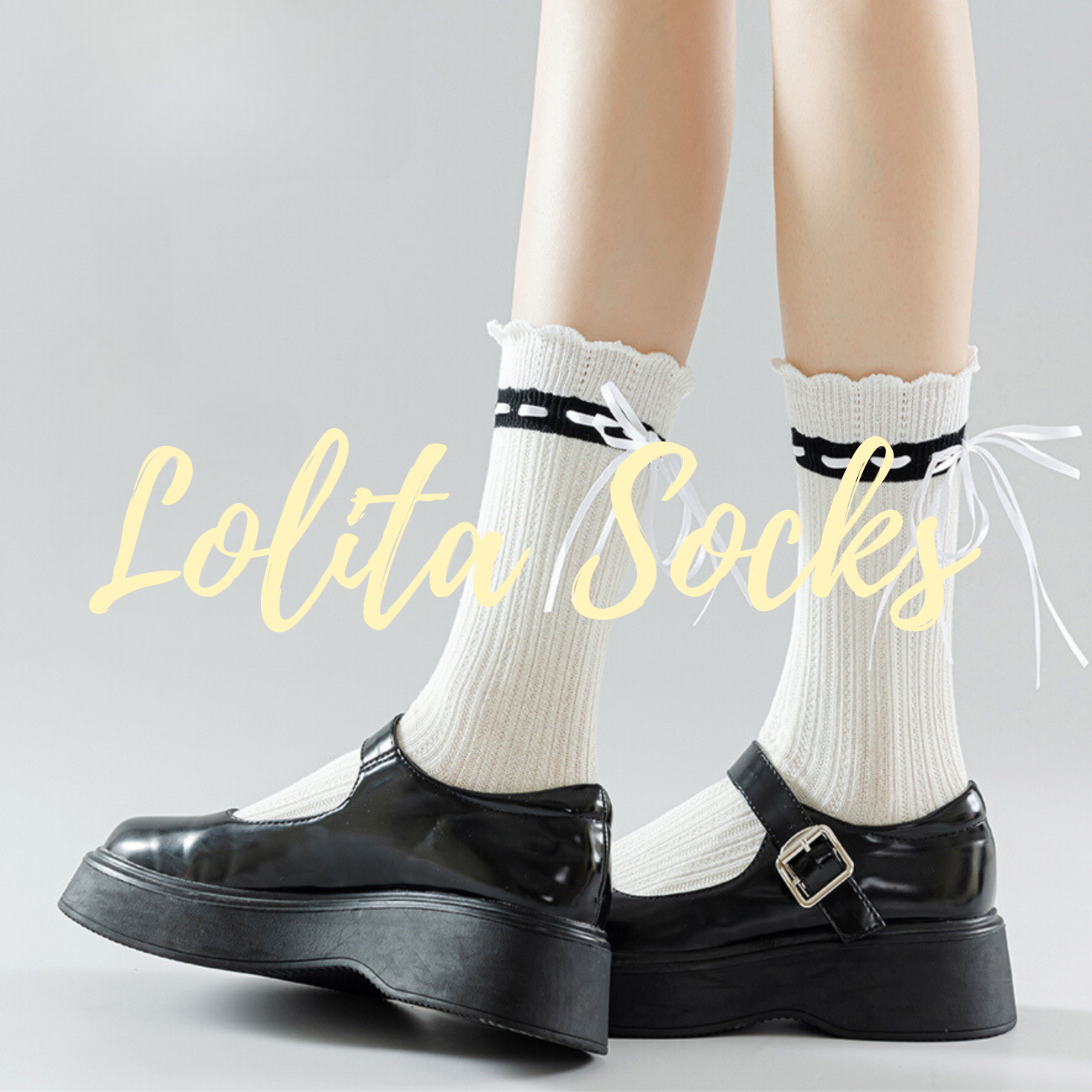
If an existing blue ribbon or bag carries the personal connection, white socks can serve a different purpose: a light detail around the shoes. The White design shown below has ribbing, small white bows and ruffled cuffs. Its decoration remains visible even without adding another colour to the outfit.

That makes White a candidate when you want a light ankle detail as well as your coloured accessory. It is not automatically invisible or understated: a white cuff beside a dark shoe can stand out. Decide whether you want that contrast, rather than treating “neutral” as a promise that nobody will notice it.
Compare the White option of Ribbed Bow Socks with Ruffled Cuffs if those details serve your outfit. For the separate question of where the decoration should sit, use the guide to keeping decorated cuffs in view. The colour decision comes first; cuff placement follows it.
Choose Black according to how much cuff detail you want
Black gives you another route when an accessory already carries the meaningful colour. The plain option and the lace-cuff option below create different ankle details, even though both selected product options are labelled Black.

If your plan is a blue bag with dark shoes and a quieter ankle detail, compare the Black option of Black Slouch Socks. The shop image shows a plain black sock laid flat. It does not demonstrate how it will gather, fit or sit on your leg. Use it to consider the colour area, then check the product information separately.

The lace-cuff design has a different role. Its white edge and black bows add contrast and decoration. Choose that direction when you want a noticeable cuff alongside your meaningful accessory. If your aim is to let the accessory carry most of the detail, the plain design or a suitable owned pair may better serve your plan. Black alone does not settle how visually busy the sock will be.
Check visibility and shade without treating pictures as swatches
Compare your actual hem, shoe opening and coloured accessory together. First check whether the sock area is visible. Then consider whether its lightness, darkness and decoration support the colour role you chose. Changing all three parts at once makes it harder to tell which decision helped.
Keep shade certainty separate from styling preference. Nikon's explanation of white balance describes how lighting and camera settings affect photographed colour. Consequently, these separate shop images cannot prove that Blue matches an item you own, or that White matches a cream garment. If an exact shade is essential, the images alone are insufficient evidence.
All four illustrations are existing shop product images; their upstream AI or photographic origin has not been verified. They show separate designs, not a controlled comparison of one outfit or a wear trial.
For a final purchase check, use our guide to finding a wardrobe gap before buying socks. If a pair already in your drawer supplies the colour or neutral support you need, your decision can end there.
Take the next step that matches your outfit
Your useful outcome is a clear role for the socks. Choose Blue if it is your selected meaningful colour and you want the accent at your ankles. Choose White for a light, decorated detail when another item carries the colour. Consider plain Black for a simpler dark area, or the black-and-white lace design when a contrasting cuff is part of the plan. Keep your existing pair whenever it already gives you that result.
If the contrasting cuff is the detail you want beside your existing coloured accessory, view the Black option of Lace-Cuff Socks with Ribbon Bows. Check the exact selected option and any size or specification information you need on the product page. The image is a guide to visible design details, not evidence of material, fit, package quantity or an exact colour match. Buy only if that design fills the gap you identified.