Why Did Japanese Loose Socks Use Sock Glue in the 1990s?
Sock glue held the top of a loose sock at the height the wearer chose, leaving the extra fabric below free to gather into folds. That combination is the answer to a detail that can look contradictory in photographs of 1990s Japanese fashion: the sock looks as if it is sliding down, yet the top stays partway up the leg. The cuff and the folds are doing different jobs. The cuff marks where the sock starts. The fabric underneath supplies the volume.
In Japanese, the style is called rūzu sokkusu (ルーズソックス). White loose socks appear in accounts of kogaru fashion, associated with stylish high-school girls in 1990s Japan. The historical question is how wearers produced a recognizable shape and why a sock adhesive returned to popularity alongside it. The same visual ideas can help an adult reader compare modern slouch socks, even when the current product is designed to be worn on its own.
What the glue changed
Imagine a long white sock worn smooth from the shoe to the calf. The eye follows one continuous stripe of fabric. Now imagine the same color with a short visible section above several generous folds. The edge at the top still tells you where the sock begins, but the folds break up the lower part into bands of light and shadow. The effect changes again if the top drops until it is buried in the folds. You have roughly the same color and material in the outfit, but a different silhouette.
Sock adhesive addressed that last variable. It could help keep the cuff at a chosen height as the wearer moved. The fabric's length, width and placement determined where there was enough cloth to bunch. A high edge could leave a longer-looking section of sock before the folds began. A lower edge could bring most of the visual weight closer to the shoes. These are ways to read the silhouette, rather than fixed historical rules about one correct height.
Hakugen Earth's current product description makes the basic purpose clear: Sock Touch helps keep a sock in the position the wearer chooses and prevents slipping. That accounts for control of the top edge. The stacked folds still depend on the spare fabric and how the wearer arranges it.
A photo can show the approximate position of the cuff and where the folds sit against the shoe. It usually cannot establish what held the sock there. Some photographs show a deliberate shape, but the adhesive itself might be invisible. Position and folds are the useful clues for visual comparison. Evidence that a particular wearer used glue would need to come from a description, an interview or another source tied to that outfit.

How an existing product came back into fashion
Hakugen Earth, the manufacturer behind Sock Touch, dates its original launch to 1972. Its February 2026 company release describes the product as a liquid roll-on sock fastener and places the big loose-sock-related hit around 1994. The release also describes renewed attention associated with more recent interest in Heisei-era fashion. Those are the manufacturer's retrospective milestones.
Sociologists Tadashi Suzuki and Joel Best give a closer look at the early 1990s in their study of kogaru trendsetting. They describe loose socks as long white socks arranged to hang around the calves and ankles. On page 71, they trace the return of Sock Touch to word of mouth among kogaru in Tokyo, followed by coverage in magazines such as Seventeen and Puchi Sebun. Their account puts the start of the sales rebound in 1993 and records a further jump in 1994, citing figures from earlier Japanese research.
Read together, the accounts show a sequence. Sock Touch was already on the market decades earlier. The scholars describe the beginning of the renewed rise in 1993, while the company points to the product's big hit around 1994. This is a useful way to understand how a small styling tool can become associated with a particular look. The wearers who found a new use for it helped make an existing item relevant to their clothes again.
Why the position mattered alongside the shoe
The shoe gives the folds a visible boundary. With a low shoe opening, more of the sock can be seen above the upper, so even one fold can break up a plain stretch of white. A shoe with a taller opening covers more fabric. The same number of folds may look crowded if they all sit immediately above that higher edge. Looking at the outfit from the side helps you see how much fabric sits against the shoe and how much extends visibly up the leg.
The hem creates a second boundary. With a skirt, the gap between the hem and the sock's top can be a prominent part of the outfit. With cropped trousers, the fabric above the cuff may hide part of the sock until you move or sit. If you are dressing for a visible slouch, look at the entire gap from the hem to the shoe. Decide whether you want an obvious light cuff, a compact stack just above the shoe, or a longer visible section of socks with fewer folds.
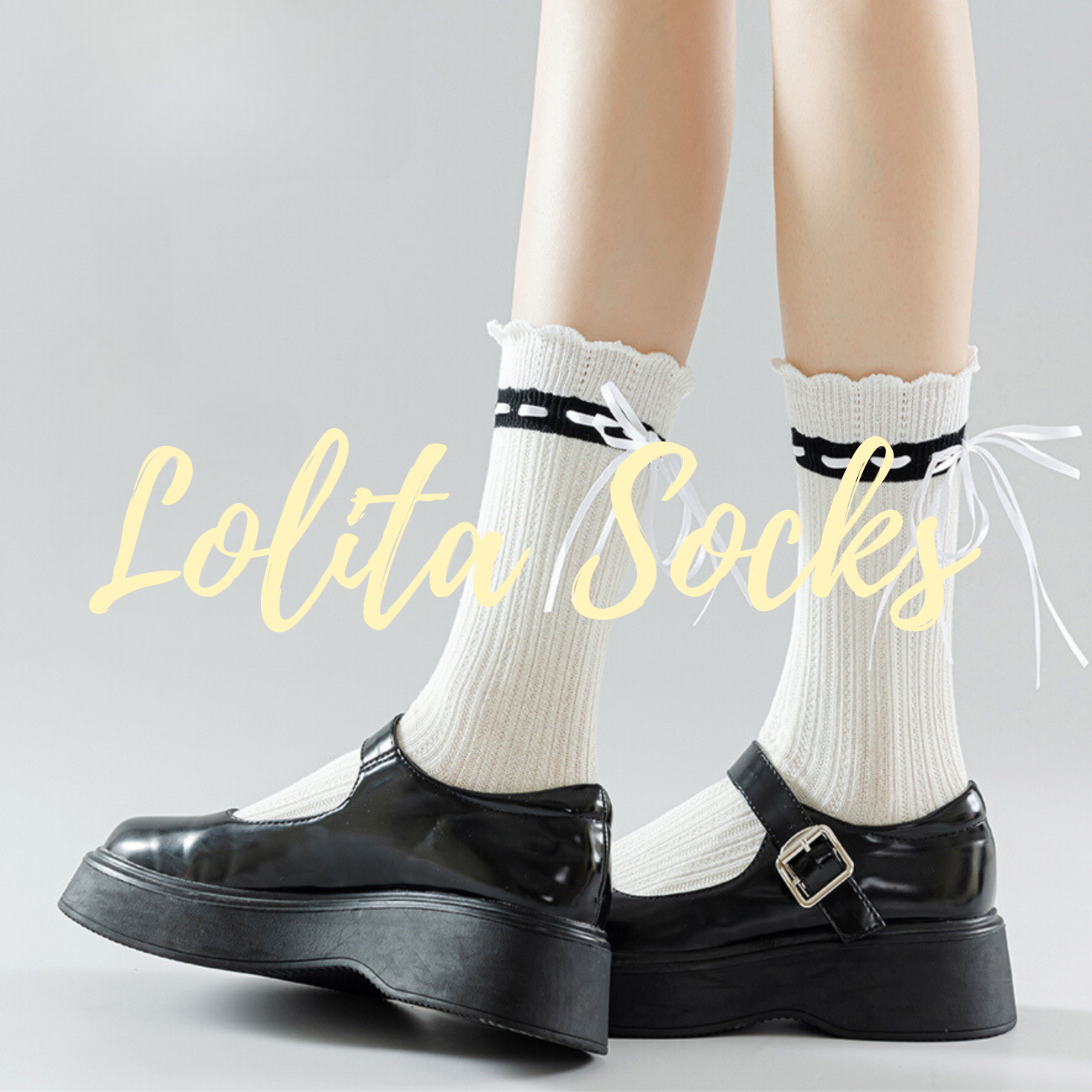
For a current reference, compare the shape on the White Slouch Socks product page. Look first for the points where the folds meet the footwear, then at the color contrast between the sock and shoe. Treat the pictures as examples of a current style. They give no basis for attributing a fastening method to historical wearers or assuming the current socks require adhesive.

Loose socks, leg warmers and today's choices
The name and the silhouette can be misleading when a buyer sees only a cropped picture. A footed loose sock continues inside the shoe. A footless leg warmer is a separate layer around the lower leg, so any coverage inside the shoe comes from another garment. Both can produce folds near the ankle. Compare a photo that shows the lower opening or the foot before using an outfit photo to identify which type the listing offers. Our history of leg warmers in Japan gives more context on the two shapes. The leg warmers collection offers examples of the separate layer.
If you already have dark shoes and want a clear boundary between shoe and sock, start by comparing a white pair against them. For a gentler change in shade, consider how Gray Slouch Socks would sit against the same shoe. Keep everything else in the outfit fixed when you compare. If you switch shoes and hems at the same time, it gets harder to tell whether the color, the sock height or the amount of fabric changed the look.
The sneaker guide to shaping slouch sock folds goes into modern outfit proportions. You can also browse the loose socks collection to see how the visible folds differ from pair to pair. Where a pictured height or drape matters to your choice, check the information for the exact product first. A picture is a useful reference for the shape shown, but it cannot tell you how far an unmeasured sock will reach on your leg.

A simple way to compare two pairs
Start with the shoes you intend to wear. Choose whether the folds should touch the shoe opening or sit above it and leave a short stretch of smoother fabric. Next, decide whether the cuff itself belongs in the outfit or can sit under the hem. Finally, look at the sock from the front and side. The front shows the color relationship between shoe, sock and hem. The side shows where the fabric has gathered and whether it gives the shoe a bulkier outline than you wanted.
Then compare a specific White Slouch Socks option or Gray Slouch Socks option using those same questions. In the historical style, fixing the cuff helped keep two features visible together: a top edge at a chosen height and a loose stack underneath. Separating those features makes the shape easier to recognize in old accounts and easier to compare in a modern outfit.